Spectroscopic observations of periodic bursty ejections during a dome-spire-shaped jet
The study investigates the complexity of the formation and evolution of a dome-spire-shaped jet (or anemone jet) presumably driven by null-point magnetic reconnection.
We aim to provide a quantitative estimation of multi-temperature plasma dynamics and physical parameters of the jet and its blob-like features, together with its temporal evolution in three-dimensional perspective.
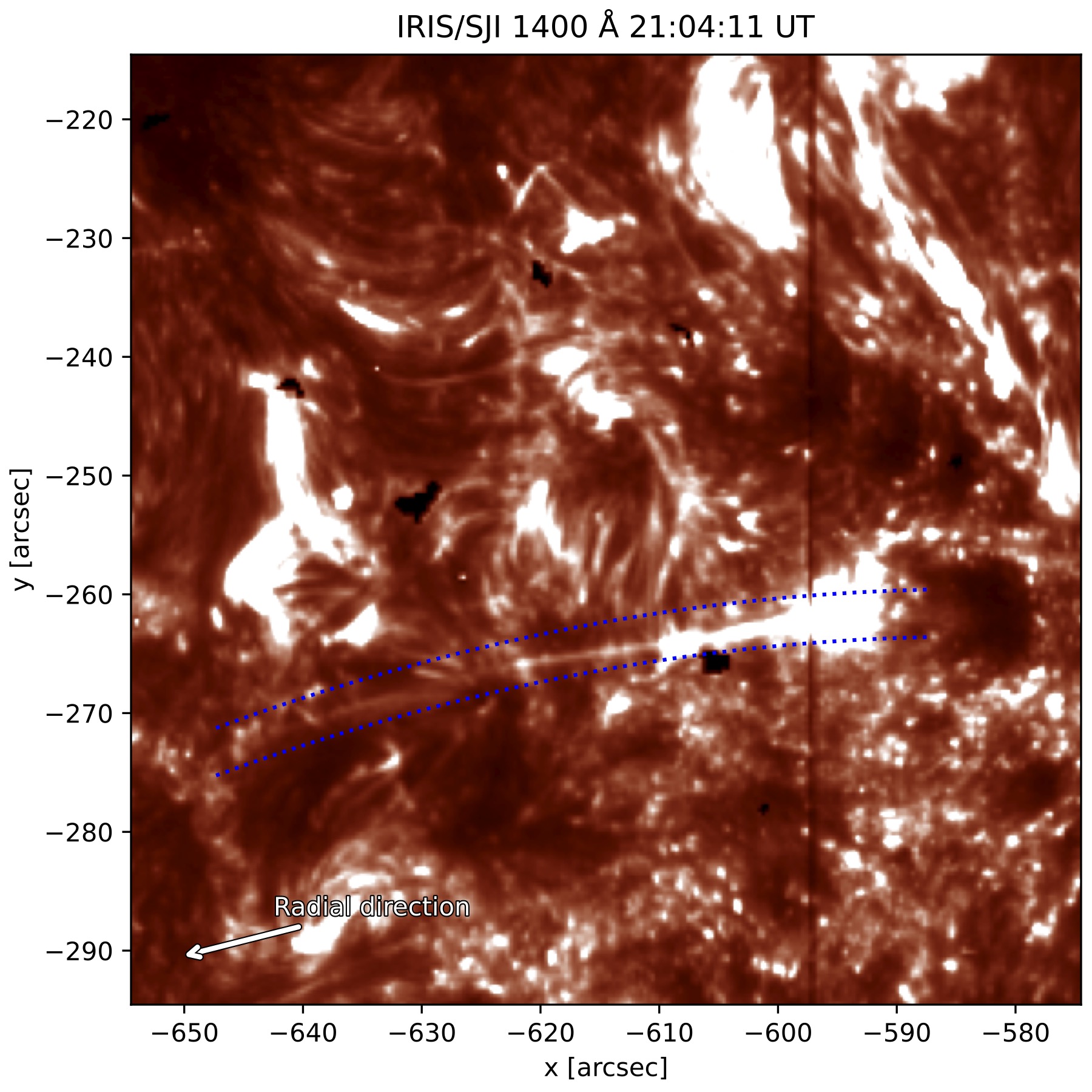
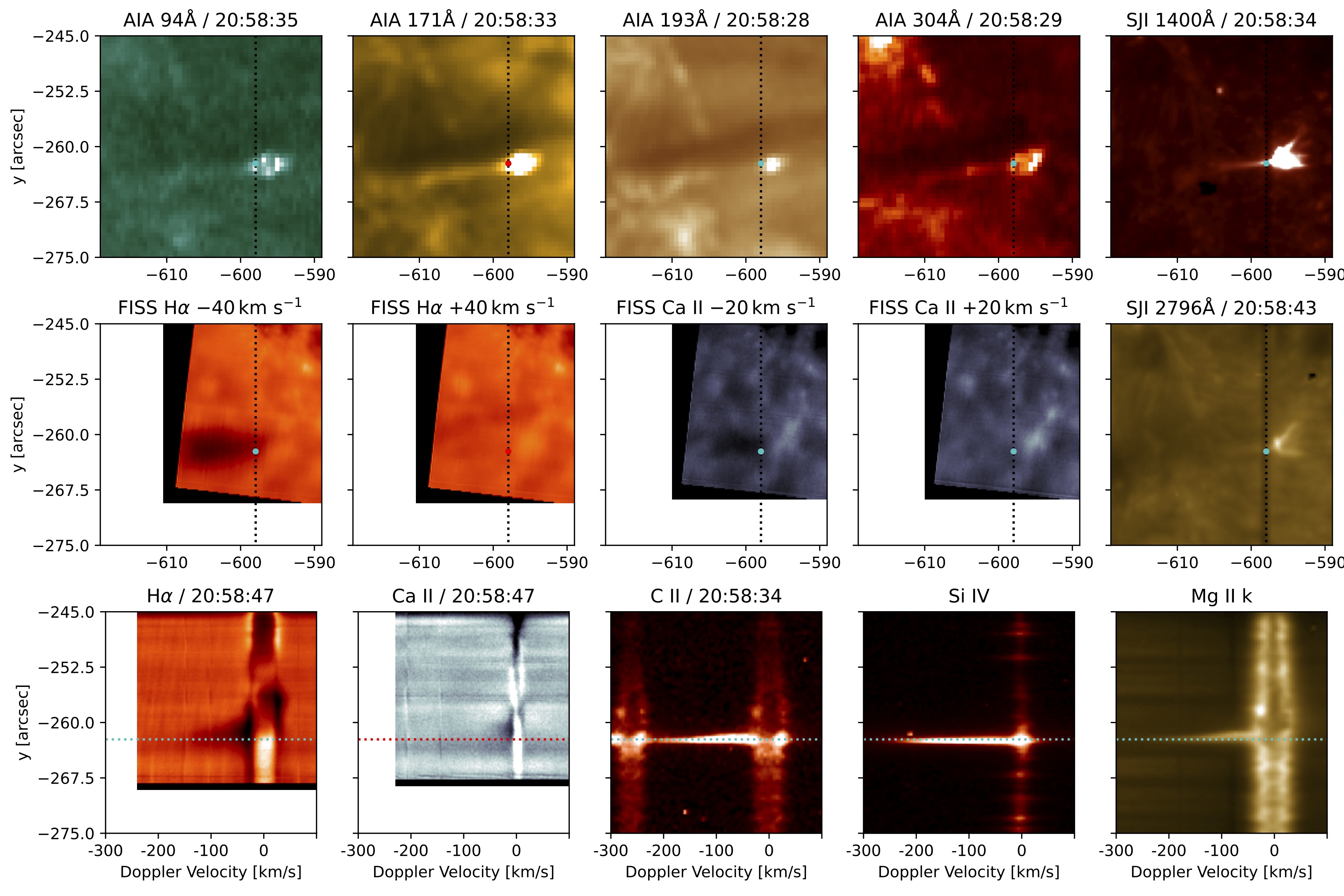
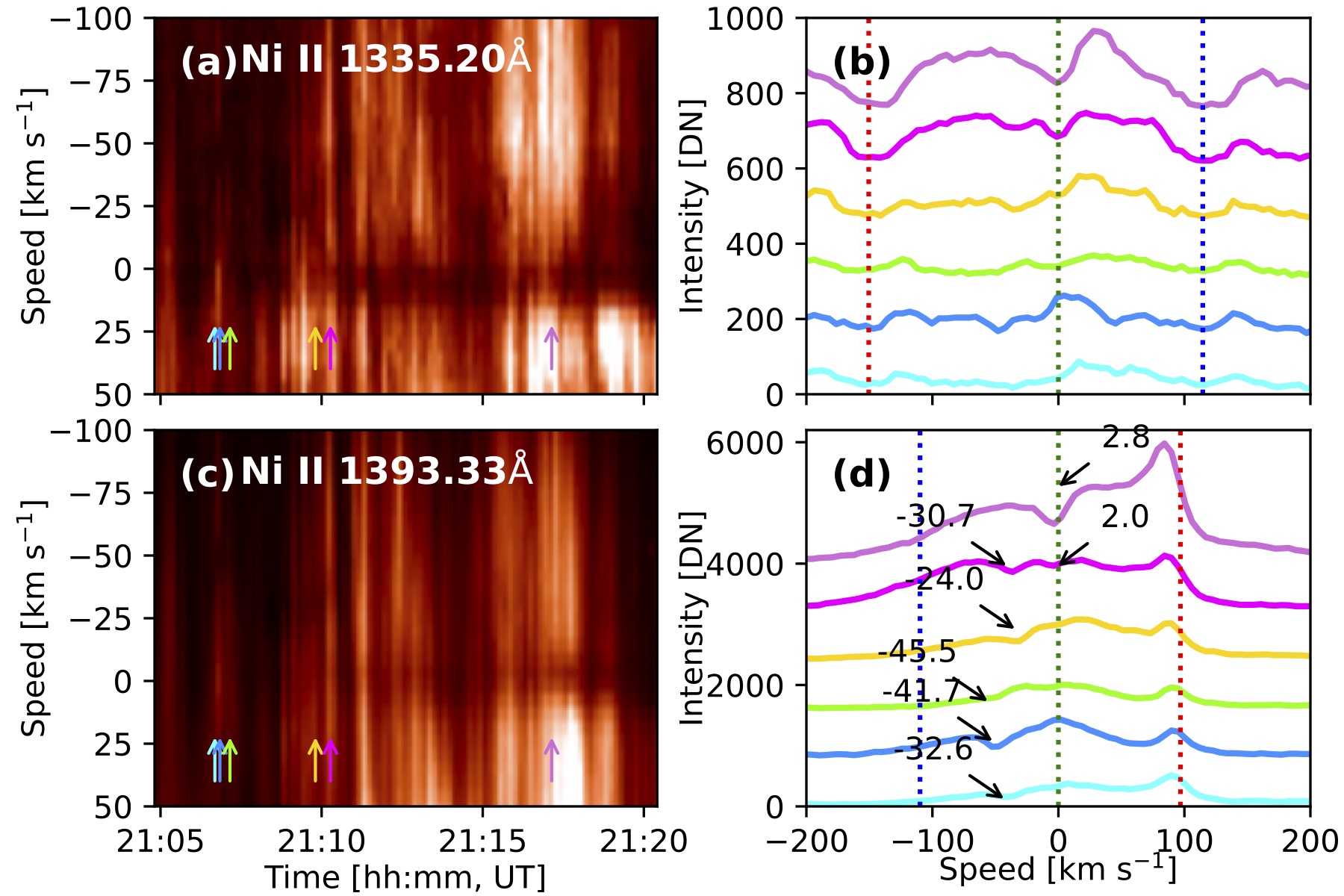
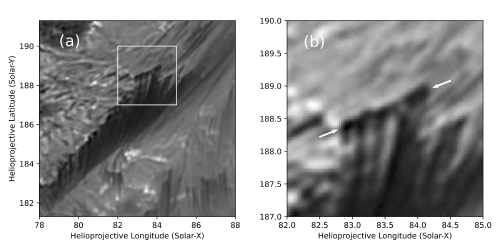
For this, we analyze unique sit-and-stare spectral (Si IV, Mg II k, and C II) and slit-jaw imaging 1400Å and 2796Å observations obtained with the Interface Region Imaging Spectrograph (IRIS), with a slit uniquely positioned just above the assumed reconnection site. Co-observations taken with the Fast Imaging Solar Spectrograph of the Goode Solar Telescope in the chromospheric H$\alpha$ and Ca II 8542.10Å lines were also analyzed. These data are complemented by EUV imaging information from the Atmospheric Imaging Assembly on board the Solar Dynamics Observatory.
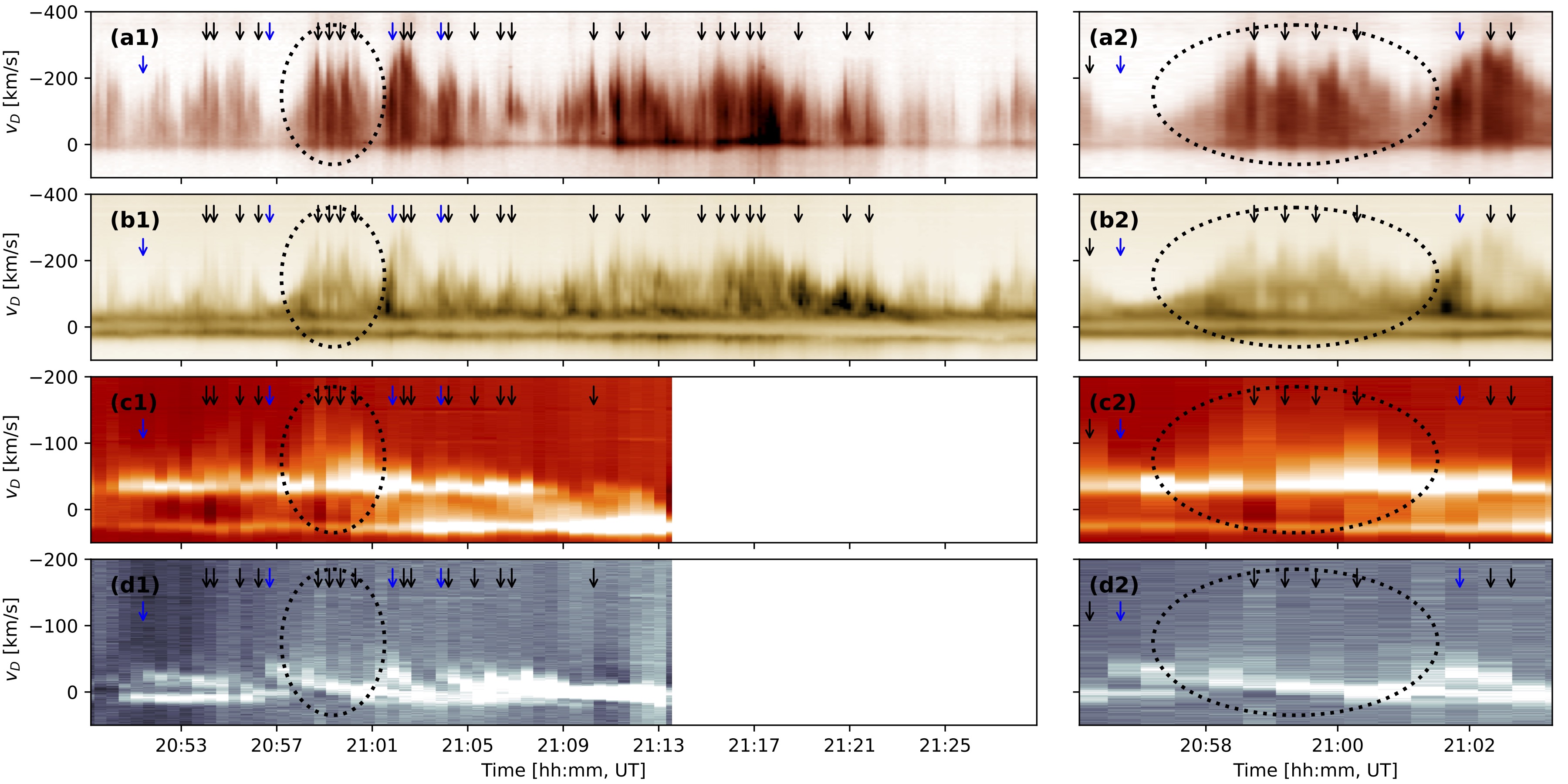
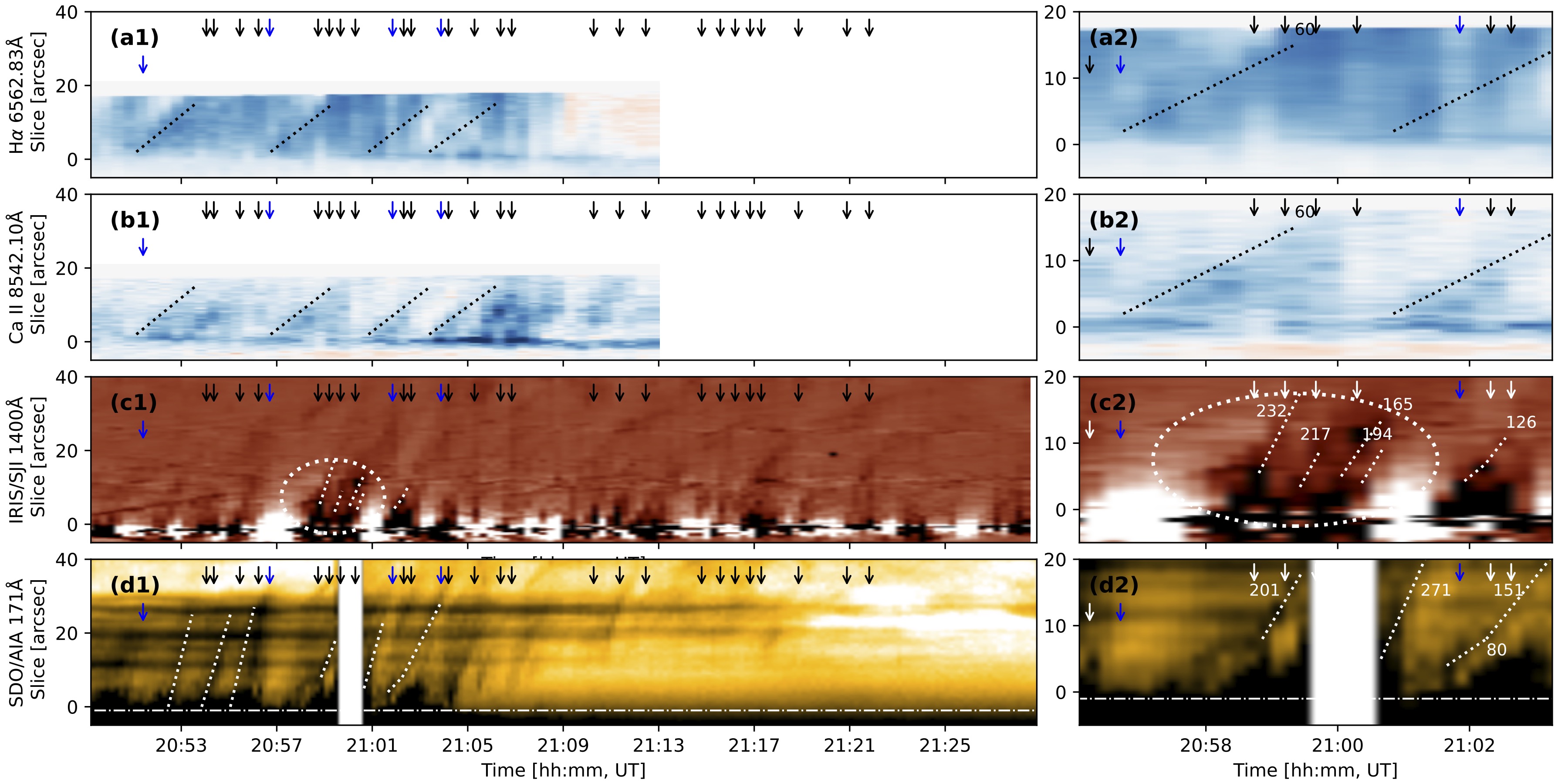
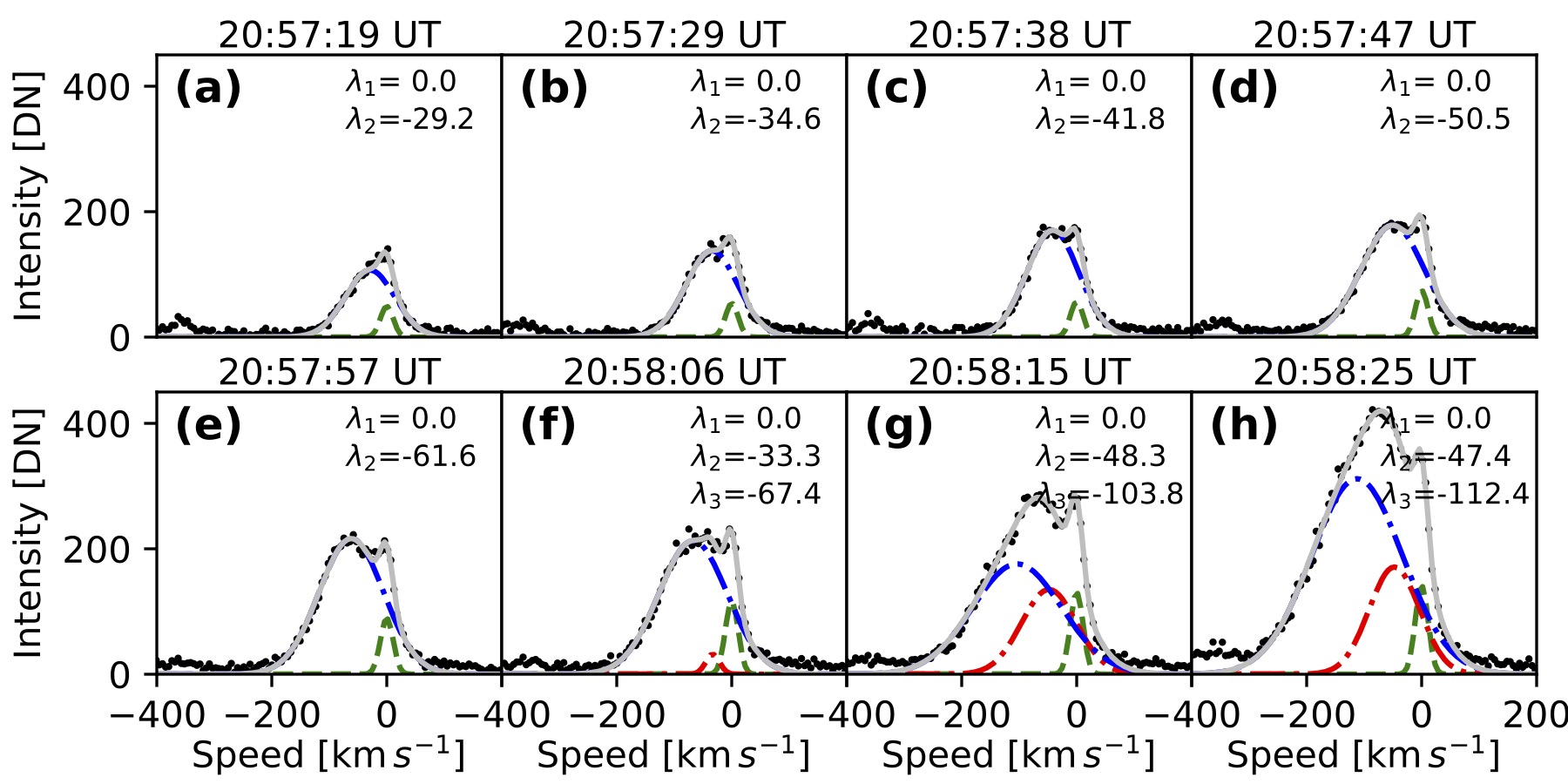
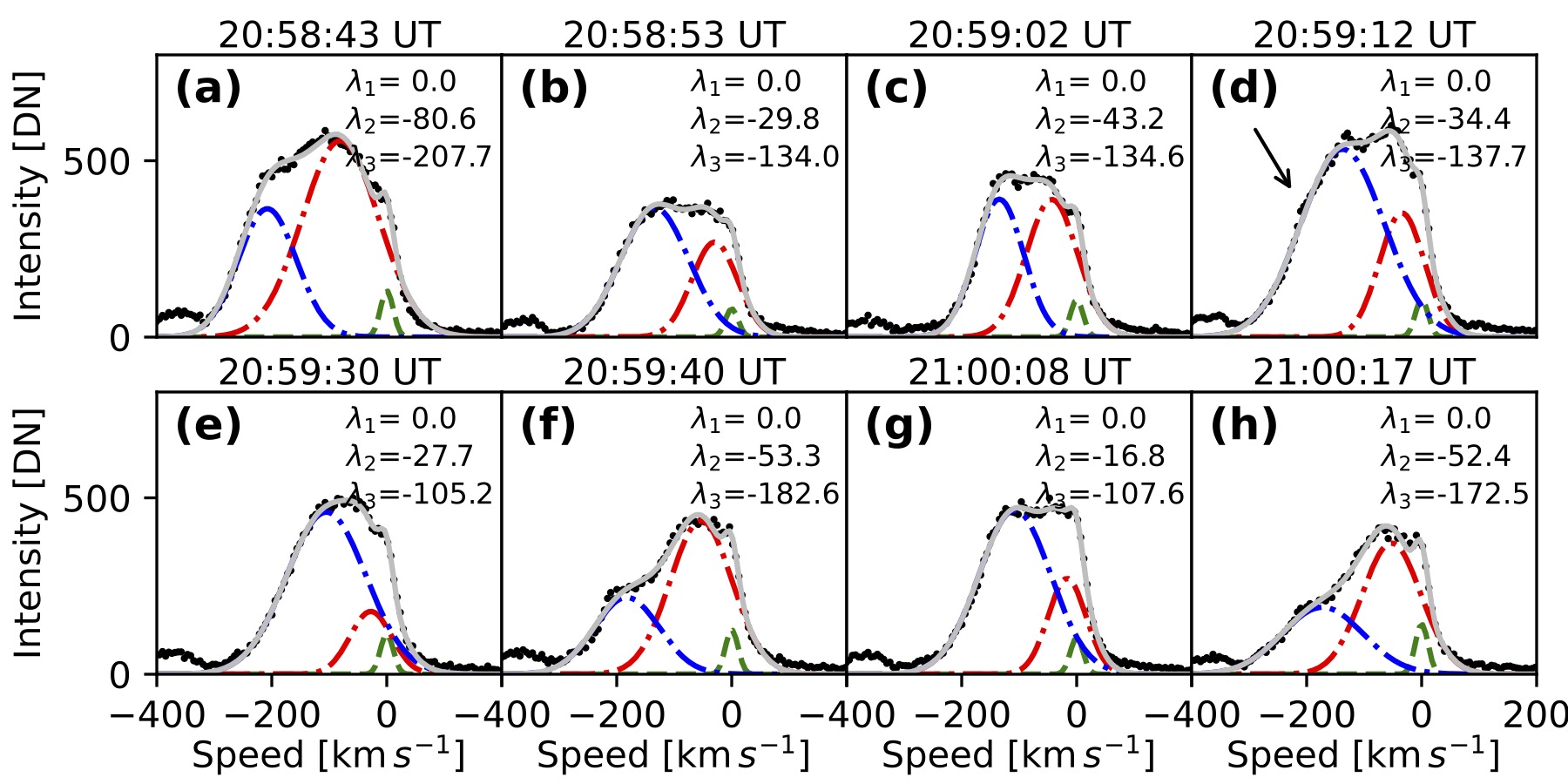
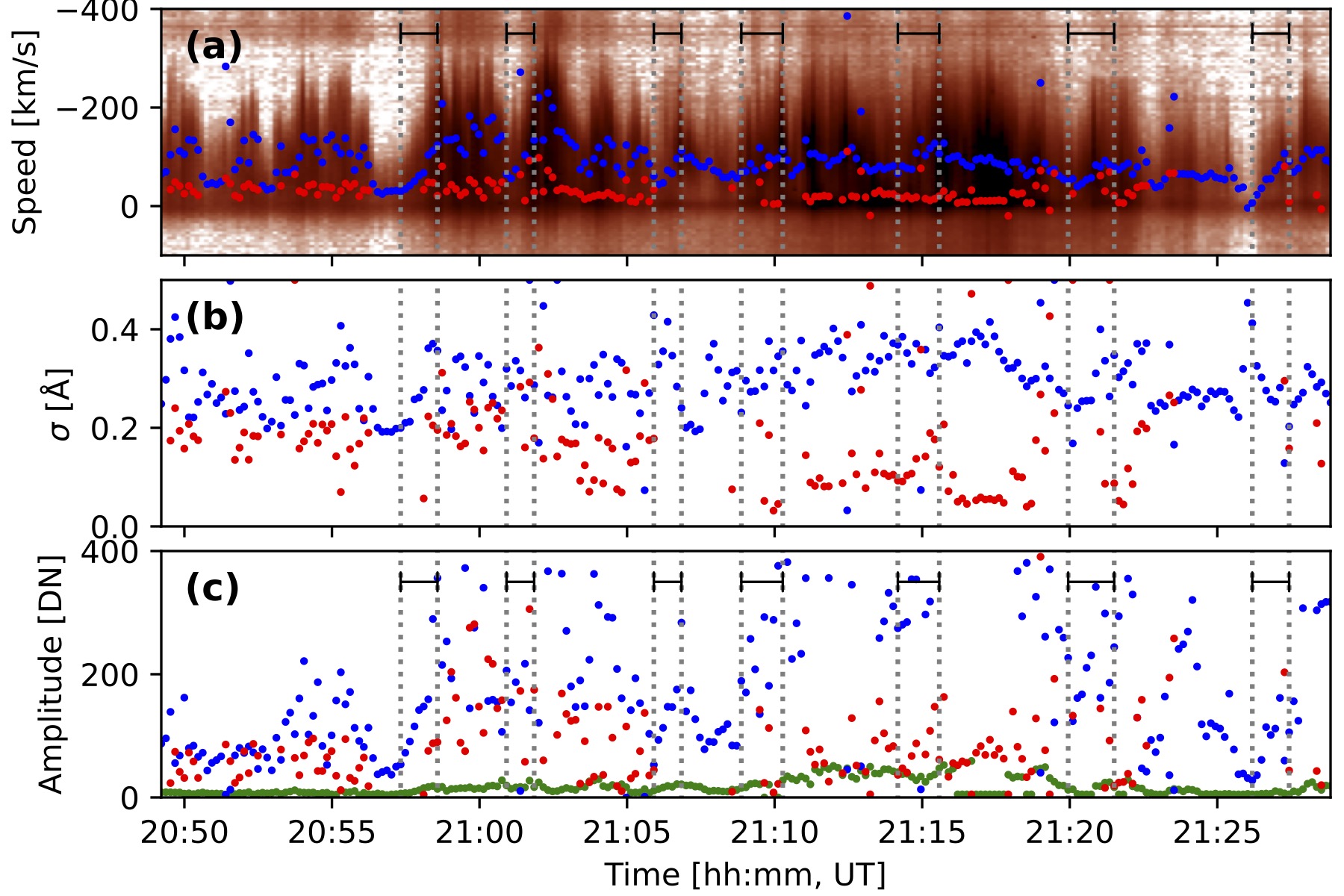
The IRIS observations reveal that the jet is formed by multiple periodic (~30s) plasma ejections with blob-like appearance, each associated with strongly blueshifted Si IV 1402.77Å transition-region emission reaching about -300km/s. More importantly, the ejections are grouped into well-defined packets, each lasting approximately 3–5 min. In contrast, only a single Doppler component is observed in the chromospheric Ca II line. Multi-Gaussian decomposition of the Si IV line profiles reveals a highly accelerated plasma, with Doppler velocity increasing linearly from ~-30 to -112km/s over 66s, corresponding to an acceleration of 1.3km/s^2. The kinetic energy release rate is estimated in the range of ~1e24-1e25 erg/s.